For the second year in a row, Apple has added a button to the iPhone. New iPhone buyers will have two different hardware buttons to get familiar with, both the Action Button (introduced on the iPhone 15 Pro, and now on all iPhone 16 models) and the all-new Camera Control button.
For those of us who remember the era where Apple attempted to strip buttons and ports off of all its products—reaching a low point with the completely buttonless iPod shuffle—it’s a remarkable turnaround. I got to spend some time trying out Camera Control this week, and while it’s not guaranteed that everyone will love it, I think it’s got a lot of advantages that will make the iPhone a better camera.
The original decision covered the period from 1991 to 2014, and related to the way in which profits generated by two Apple subsidiaries based in Ireland were treated for tax purposes.
Those tax arrangements were deemed to be illegal because other companies were not able to obtain the same advantages.
Ireland, for its part, was trying to avoid collecting on these taxes, deeming the subsidies beneficial for bringing big businesses to Ireland. Though given that much of Apple’s Irish entities were reputedly present in name only, it’s a question of how much they actually created in jobs and revenues. (A question raised in general about localities offering tax incentives to large corporations.)
Apple expressed disappointment with the ruling in a statement, but said “This case has never been about how much tax we pay, but which government we are required to pay it to. We always pay all the taxes we owe wherever we operate and there has never been a special deal.”
European Commissioner for Competition Margrethe Vestager hailed the ruling as a victory, calling it ” a win for the level playing field in the Single Market, and for tax justice.”
One thing worth noting: the money in question has been in an escrow account during the legal wrangling, meaning that it’s not a fine, per se. Instead, that money will now be released to Ireland.
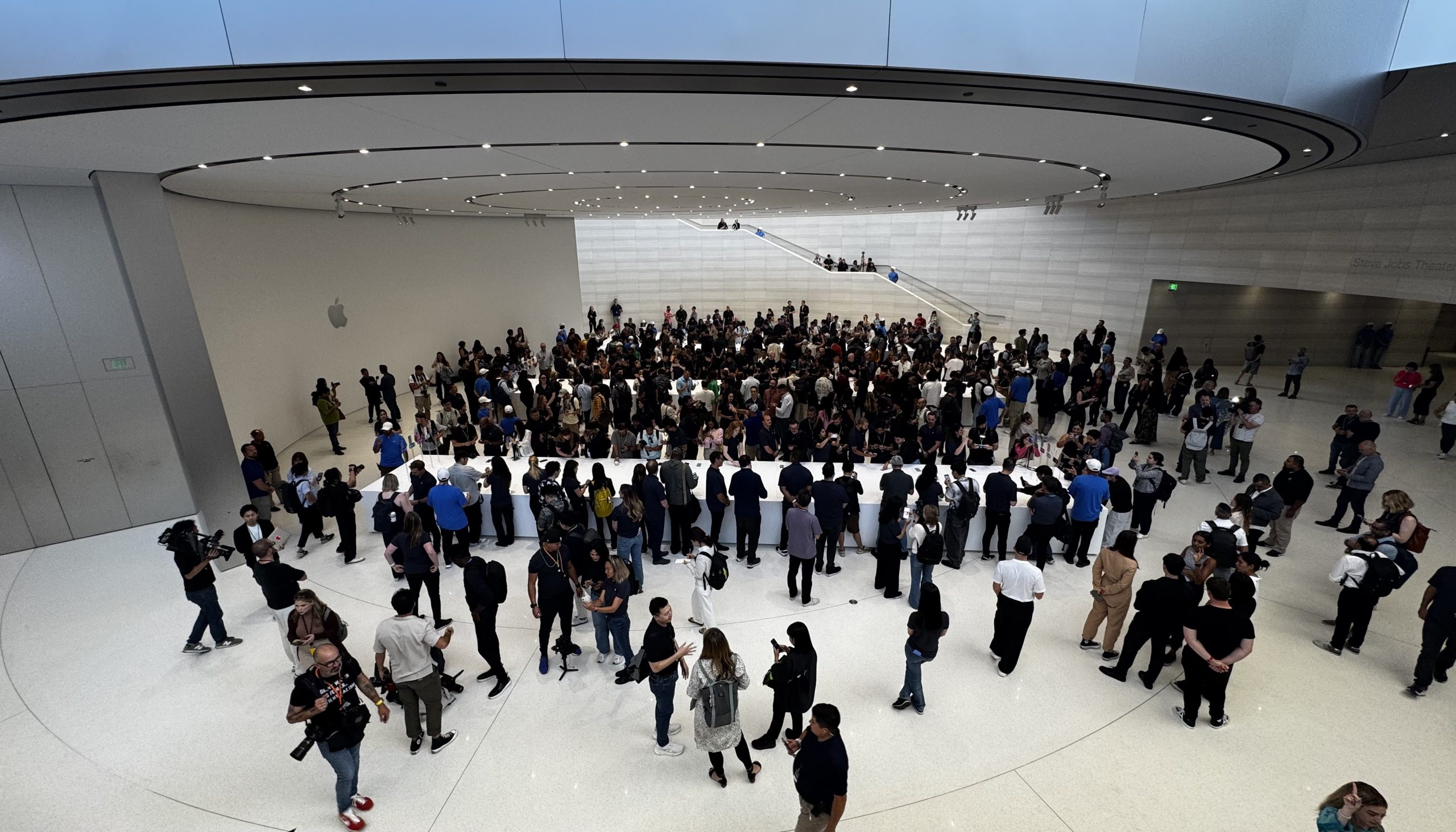
I’m just back from Cupertino and a morning spent at Apple Park, including a visit to the Steve Jobs Theater. You didn’t get to see it, but we were greeted by Tim Cook, who came out on stage to say “Good Morning” at least six times (!) and then express his excitement at showing us the big new iPhone announcement.
The video we saw, you saw. But I did get to ascend the stairs afterward and enter a packed hands-on area, where I picked up a few tidbits about the new announcements. Presented here, in no particular order, are some observations and notes about Monday’s big Apple announcements.
This is Tim on stage.
Welcome (again), Apple Intelligence. Those who pay close attention to Apple will know that Apple Intelligence was announced in June at WWDC, and that portions of Monday’s video were essentially a rerun. But the fact is, Apple’s iPhone event is the single Apple event that most of the world pays attention to, and it’s not even close. Apple can’t assume that the general public knows anything about iOS 18 or Apple Intelligence, at least not before today. (The marketing blitz over the next few months will continue to spread the word.)
It’s what they needed to do, so they did it. But the late arrival of Apple Intelligence does put the company in a bit of a tricky spot. They’re promoting a key feature of their new iPhone… that won’t be there if you order one for delivery on September 20. Maybe it’ll be there, in beta, a few weeks later. But only some of it. The rest of it will come in December, or maybe early next year, or maybe next spring. In dribs and drabs over time. Apple risks annoying new iPhone buyers who are expecting more substantial functionality from Apple Intelligence, and it also risks not selling new iPhones because the currently shipping AI features are meager.
It’s an awkward time. It was always going to be like this, really, as Apple scrambles to catch up to its competitors in the race to differentiate their smartphones via AI-related features. We’ll see how it goes, but I suspect it’ll be at least a year before selling the iPhone and Apple Intelligence together isn’t awkward.
Camera Control in action. I got to spend some time with Camera Control, the second button Apple has added to the iPhone in as many years. I should say up front that I’m a huge fan of adding physical buttons to the iPhone, because physical buttons build muscle memory that software interfaces can never quite build in the same way. Taking a picture on the iPhone should become second nature, just as it is with point-and-shoot cameras. The Camera Control button should enable that—and, by the way, it allows the Action Button to officially become a “do whatever you want” button.
The button itself feels really good. It’s a real button—if you push it all the way down, you can feel it depress with a pleasing tactile response. But it’s also a touch- and pressure-sensitive button that lets you “push halfway” to bring up another set of options, for things like zooming in or switching between photographic styles. If you keep your finger on the button and half-push twice in quick succession, you’ll be taken up one level in the hierarchy and can swipe to different commands. Then half-push once to enter whatever controls you want, and you’re back to swiping. It takes a few minutes to get used to the right set of gestures, but it’s a potentially powerful feature—and at its base, it’s still very simple: push to bring up the camera, push to shoot, and push and hold to shoot video.
The button appears to support third-party camera apps via an API, so it’s not going to be a waste if you prefer to use Halide or Obscura or even Snapchat, as Apple’s video suggested. No sign of support for the button for other apps—it’s called Camera Control, after all—but again, the Action Button can serve for a second input for whatever you want.
Ultramarine, I love you.
The Color Czar comes for the iPhone 16. One of the advantages of going to the iPhone event is being able to see the products close up, especially the colors, which don’t always come across in event photography. I’m here to applaud the choices Apple made in the regular iPhone 16 models this year. That Ultramarine color is lucious and beautiful. The Teal really pops, too, but as a survivor of the 1980s it just screams “prom dress” to me. Your mileage should probably vary. I have it on good authority that the Pink phone is very nice, but Pink’s not a color I see very well, so don’t take my word on that. (On the iPhone 16 Pro side, welp, it’s monochrome and Desert Titanium, which looks… sort of gold with tan? Even more colorless than last time, alas.)
I’ll give some praise for the styles of the Apple Watch, even though they’re not colorful. The Jet Black aluminum Series 10 is shiny and beautiful, and the Slate Titanium model also looks gorgeous. (There are also other gold and silver shades, should you prefer.) The Apple Watch Ultra might not have gotten an update, but they added a black version of the Ultra 2 that looks very good, if you’re into that sort of thing.
Presenting… “Intelligence.” Despite the event being a re-introduction of Apple Intelligence as a concept, some products just can’t do Apple Intelligence. What’s an Apple Watch to do? The answer is to put up a box that highlights “Intelligence”—unbranded, generic “Intelligence”—to show off machine-learning-derived features like crash detection, voice enhancement, and even sleep apnea detection. The problem with creating a brand around Apple Intelligence is that it creates a quandary when it comes to describing machine-learning stuff that isn’t in that particular bucket.
And more broadly, Apple’s going to need to figure out a way to explain how Apple Intelligence can interface, if it can, with products like the Apple Watch, Apple TV, and HomePod that are unlikely to get the specs to run Apple Intelligence themselves for quite a while. I’d be satisfied with a simple statement that my Apple Watch kicks queries to my iPhone for use with Apple Intelligence. In any event, this issue will only become more noticeable as time goes on.
Photographic Styles forever. Three years ago Apple introduced Photographic Styles, which let users dial in their preferred photographic looks deep down in Apple’s photographic pipeline, letting them choose just how they wanted all the photos they took to look. The iPhone 16 and 16 Pro get a new generation of Photographic styles that’s different in some notable ways.
First off, it’s editable after the fact. They mentioned this in the video, and I have to admit that I sat there kind of baffled. How can you… edit something generated from deep down in Apple’s photography pipeline… after the fact? Isn’t that just what we’d call a “filter”?
It turns out, not so much, as Camera and Photos Product Marketing Manager Della Huff told me afterward. These new iPhones actually save additional data every time they take a photo, giving Photographic Styles the ability to reconstruct and rebuild photos after capture. Huff shot a picture using a black-and-white Photographic Style, then jumped into Photos and moved it to a different style, one with color—and color appeared in the image. This extra data takes up some extra space in the image file, but it allows users to make creative changes to their photos after the fact, which is pretty amazing.
Still, isn’t applying looks to photos what the Filters feature in the Photos app is all about? Isn’t this duplicative of that? Well, yes, and that’s why for iPhone 16 and 16 Pro users, that Filters interface is gone—because now Photographic Styles are all you need. Given all the presets as well as the fine adjustments you can make to styles, I’m not sure most users will mind.
A strange lack of detail. I was puzzled by the lack of detail in a few portions of Apple’s video. The two different sizes of Apple Watch were never mentioned or detailed. There was a superlative—the largest Apple Watch screen ever!—but without any detail. At least they mentioned the new thickness of the Apple Watch.
On the iPhone side, Apple mentioned the size of the new iPhone 16 Pro screens, but not the overall size changes of those models. (Greg Joswiak said something about holding back “product growth”—or was it “bloat?”—by reducing the bezels around the display, but never actually said more than that.) Even more puzzling, all iPhone models got battery boosts, allowing Apple to make a claim that we’re seeing the longest battery life ever in iPhones—but never followed up that superlative with an actual number, either. It’s weird. Has Apple just decided not to quote specs at all in event videos? Boasting about long battery life sure connected better with an audience if there’s something tangible, like a number, attached.
Product updates that aren’t updates. I’m not sure I understand the state of the AirPods Max, which got an “update” that amounts to new colors, a USB-C port instead of lightning, and a single software feature—support for personalized spatial audio. That’s not an update. It doesn’t have the H2 chip that’s in the other AirPods. It doesn’t support all the new adaptive audio modes, the nod/head shake gestrues, or really anything introduced with the AirPods Pro 2 that’s also now on both AirPods 4 models.
And if the AirPods Max isn’t an update, are the AirPods 4 two updates in one? Apple is shipping two distinctly different models—one with noise cancellation, one without—but has decided to call them both the same thing. The product line is simpler this way, I suppose, in the sense that there are only AirPods, AirPods Pro, and AirPods Max, but it’s not really simpler since one of those products is actually still two products. Still, if those $179 AirPods 4 really do a good job at noise cancellation, that strikes me as a pretty nice value. (Meanwhile, the old AirPods Pro 2 are also hearing aids now, via a free software update? Now that’s an upgrade.)
Expected clearance. Speaking of using AirPods Pro 2 as hearing aids, it’s interesting that Apple went ahead and pre-announced that feature, as well as the Apple Watch’s sleep apnea detection, despite not receiving final approvals from regulators. Apple announces products on its schedule, so it expressed extreme confidence that the two features will be approved—and I’m sure regulators are well aware when one of the world’s biggest companies makes statements like that. Hopefully there are no hiccups, because again, it would not be great if you bought an Apple Watch for sleep apnea detection, or AirPods to use as hearing aids, only for a regulator in your country to put the kibosh on the whole thing. (And again: this is Apple announcing hardware and selling features that aren’t actually shipping on the hardware, but enabled via a software update. I understand why it’s happening, but it’s a dangerous game.)
From the iPhone 16 to the Apple Watch Series 10 to the AirPods 4 to the other AirPods 4, and with the release of Apple Intelligence hanging over it all, we break down the announcements from the September Apple Event.
Larry Ellison’s ownership of Paramount and what it might mean for CBS News; why Netflix and Apple just don’t get movies; Hallmark’s new streaming service; the rise of Tubi and FAST; and streaming’s lack of curation.
Microsoft’s Copilot+ PCs use ARM processors, requiring that games coded for Intel processors run in a translation layer, something only about half of the ones tested appear to be able to do smoothly.
More like Copilot- amirite yeah, I’m right.
One frequent cause of problems is the software built into some games to prevent cheating—an essential feature added to titles such as “Fortnite” and “League of Legends.” Even if the game itself can be translated to run on Arm, the anti-cheating software may be incompatible.
Cheaters don’t win, winners don’t cheat, and neither uses an ARM-based Windows PC because the games won’t run on them.
So, which would you rather have, Windows users? Your games or Copilot?
Is this a trick question?
It might be tempting to think that this is an opportunity for Apple. The company has rolled out tools to help developers port games to macOS. But suggesting Apple will finally score big in games is like predicting the year of Linux on the desktop. Or the year the Mariners will go to the World Series. Instead of trying to predict it, just assume it’s never going to happen and if it does in your lifetime, you can be pleasantly surprised.
Great expectations
We are just days from experiencing Glowtime, so what’s the fuss all about? Why are all the kids obsessed with Glowtime?
(Are your kids doing Glowtime? Here are some warning signs: Talking about “The best phones Apple’s ever made”…)
We can expect to see new Apple Watches at the event on Monday. The Series 10 will reportedly be thinner but have a larger case, and the third iteration of the SE will have a plastic case that absolutely no one will complain about because everyone loves change.
New AirPods are also expected in two models at two different price points. The higher end will have active noise cancellation and the lower end — possibly named AirPods SE — will have manual noise cancellation which requires the user to tell other people to shut up.
“We think people are going to love it.”
(“Billy, what are you doing in there? It better not be Glowtime.”)
Mostly what we’ll see is that new iPhone you’ll get not because you want new features, but because your current phone is a piece of crap. According to a new study by CIRP, the biggest reason people buy new phones is simply that their old phone is “obsolete”. Of course, it’s all a matter of perspective.
The obsolete category includes some buyers whose purchase is triggered by new features on their new phone. Yet, they explain their purchase decision in terms of the condition of their old phone rather than embracing those new features.
Is the new iPhone half-exciting or is your old one half-garbage? That’s a real thinker.
Evading capture
One rumored feature of the new iPhones appears to be a capture button. Not at all Pokemon-related, the capture button would be a dedicated photograph button for those who are all thumbs and have a habit of missing the moment. I’m not naming any names. (Me.)
But as Apple giveth to the clumsy, so it also taketh away. The button is said to be capacitive and have support for multiple gestures. So, they created something complicated to fix a simple problem. Great. I look forward to taking a lot of videos when I meant to take portraits and panoramas when I wanted a selfie.
Who am I kidding? This button probably won’t trickle down to a phone I’m likely to buy for years as it seems there’s a good chance it’ll only be available on the iPhone 16 Pro models.
You know what’s great? Those point-and-shoot cameras. Those are great.
[John Moltz is a Six Colors contributor. You can find him on Mastodon at Mastodon.social/@moltz and he sells items with references you might get on Cotton Bureau.]
Fall can be relied upon for a few things: baseball playoffs, the changing of the leaves, the emergence of pumpkin spice, and, of course, new iPhones.
This year Apple’s holding its annual special event on the rare Monday (probably so as to avoid conflicting with a presidential debate on the Tuesday) and the company is expected to making a number of announcements.
In the past, Apple’s phone events have varied from those at which it felt like we’d heard rumors about everything going in, to those where it seems like we knew nothing at all. This year feels somewhere in the middle: the rumors are out there, but there’s enough of an “is that it?” feeling that it’s hard not to imagine Apple having something else up its sleeve.
So in advance of the “It’s Glowtime” presentation next week, here’s a rundown of what to expect (and not) when the video starts rolling.
In the old days, we knew about what Apple would do so far in advance, they’d print it and mail it out and it would still be breaking news.
When Apple was a small company that few people cared about, it leaked like a sieve. Sources like MacWEEK printed the company’s plans far in advance. These days, Apple is much bigger and more important, and journalists like Mark Gurman and analysts like Ming-Chi Kuo are experts at relaying the details of Apple’s future products around the world instantaneously.
Even so, there are always surprises at Apple events. On Monday, I’ll be sitting in the Steve Jobs Theater watching the same video the rest of you are watching at home, and while we can probably all sketch out the broad scope of the event, there will inevitably be little stuff that will make us scratch our collective heads. When all the big reveals are expected, the delight is in the details.
Leaks from the supply chain mean that we tend to know certain basic physical things about new Apple hardware: the shapes, the sizes, and the components with their accompanying specs. But it’s harder (not impossible, but harder) to get all the details of the software that Apple’s planning to take advantage of that new hardware.
A great example this year is the rumor of the Capture Button, a touch-sensitive area on the side of the iPhone 16 that will apparently let you open and control the Camera app. But the details are a bit hazier on exactly how it will work and what it will do. Will it control modes (video, still, etc.) or allow you to zoom or control autofocus? Will those gestures be at all customizable?
I’m looking forward to the story Apple tells around the Capture Button. This brings me to another feature of an Apple product roll-out that is very hard for leaks to get right: the narrative that Apple spins around its products. Yes, it’s all marketing, but the design choices are a part of the storytelling. Why did Apple decide last year to add a physical Action button and this year to add another button dedicated to the camera? Why is this feature different? What problems is it trying to solve for its users? The stories Apple tells around features like this tend to be quite informative about how Apple’s approach and philosophy. I find it interesting and helpful, a rare (albeit self-serving) peek behind the curtain.
Back in June, Apple spent a lot of time talking up Apple Intelligence. I’m sure a lot of people are wondering if there are going to be further Apple Intelligence announcements to come, perhaps tied specifically to the iPhone 16. I can’t see it. I think Apple is working hard to play catch-up when it comes to AI, and it played all its cards at WWDC. In fact, it played all its cards, and showed some other cards it’s planning on playing next year. If there was some other feature left in the tank, I think we would’ve seen it in June. What we’re getting is what we already know.
However, one area of Apple’s AI strategy was suspiciously vague back in June: where third-party chatbots fit in. In Apple’s world, the company’s own models use their knowledge of your personal context to help you on your device or by using Apple’s private cloud. But if you want to search for what the company calls “world knowledge,” it has said that it will (optionally) kick you out to a chatbot like OpenAI’s ChatGPT.
But the unveiling of that ChatGPT relationship was underwhelming, given that it was plastered with disclaimers, warnings, the ability to turn it off… and the fact that Apple executives kept insisting that it was merely the first partnership to be announced and that support for other chatbots would undoubtedly come in the future. They even mentioned Google Gemini once or twice, which is not something that’s usually done unless you have some confidence that you’ll get a deal done.
So here’s a possibility for Monday: Might Apple have some additional chatbot relationships to announce? Is it possible that Google Gemini or Anthropic’s Claude might be added to the list of chatbots coming soon to the iPhone? It would be a bit of a shot to OpenAI’s confidence, but given the flak Apple’s taking in the EU for not offering consumer choice, launching its chatbot functionality with a bunch of choices might be a smart move.
Monday marks the tenth anniversary of the original Apple Watch announcement, and I expect at least some interesting Apple Watch news. There’s plenty of heat around the idea that the new Apple Watch models will be bigger, and I’m really interested in hearing Apple’s storytelling about why this is a good thing. I know people enjoy having a smaller watch, and if Apple’s expanding the small watch to be the size of the (current) large model, what does that mean? Does it wear differently? Will it not seem huge? Or does Apple just have confidence, based on its market research, that it can make the Apple Watch larger and people will still buy it?
I’m also fascinated by the rumor about the Apple Watch SE, which might be getting a revision that could potentially include some lighter and cheaper materials, such as plastic. Would Apple, a company that mostly gravitates toward muted colors (or no colors at all), dare to make some eye-popping, brightly colored plastic watches, perhaps targeted at younger people?
Among the most opaque areas for Apple reporters who are trying to break news are the ones that come from a small group of people deep inside the marketing group: product names and prices. The Apple Watch SE price is a bit of a mystery, but an interesting one. Could Apple possibly get an Apple Watch under $200 for the first time? Or will it just slide into the existing price point?
And with all the buzz about Apple Intelligence, what’s Apple’s story regarding A.I. and the Apple Watch? Obviously, the hardware can’t support it in the same way as other devices and probably won’t be able to for years to come. But is there some sort of mitigation that Apple could promise for the near future? Will the Apple Watch be able to talk to an iPhone that’s powered by Apple Intelligence and use it to relay queries to a more intelligent assistant than on-device Siri? No idea, but Monday would be an opportunity to provide some reassurance, if any is on offer.
Finally, there’s the question of the blood-oxygen sensor on the Apple Watch. This will mark the first launch event after Apple was prevented from selling the device in the U.S. with the oxygen sensor turned on. Does the company really want to launch new models without being able to use that feature in its home market? Does it have any choice?
I see three possibilities: Apple could use Monday to announce that it’s reached a detente with Masimo, and that the oxygen features are once again available. It could announce that it’s somehow built a new oxygen sensor that its lawyers feel does not infringe on Masimo’s patents. Or it could just… do nothing, ship the new watches, not talk about the oxygen sensor, and people buying new Apple Watches in the U.S. will actually take a step back, assuming they’re upgrading from an older model with the oxygen sensor intact.
One last hardware marketing detail I’ll be looking for is how Apple defines the AirPods line, assuming some new AirPods are on the way. How many AirPods models are going to be for sale? Are there new low-end models that are replacing older models, or are we doing the tried-and-true Tim Cook thing of selling the older model for a cheaper price while the new model slots in at a slightly higher one? And what AirPods Pro features might creep into the lower-end model AirPods? What differentiates a “low-end” set of AirPods with noise cancellation from the AirPods Pro, and does that differentiation make sense?
One of the final mysteries of most Apple events comes from timelines. Only Apple knows exactly when the new iPhone preorders will go online, when the devices will ship, and when all the new OS versions will drop. Hopefully, we’ll hear all those dates on Monday—along with, if we’re very lucky, a better idea of when Apple Intelligence will ship to the general public.
In any event, there’s plenty to watch for on Monday, even if the big points have been spoiled. I look forward to watching the video, getting my hands on the products afterward, and relaying it all to you when I’m back home from my day trip to Cupertino.
Our preferred external storage solutions, favorite collaboration tools, motivations for smartphone upgrades, and thoughts on the potential for a Skynet-level AI scenario in our lifetime.
Dan wrote last week about reports that Apple had laid off 100 people in the Books group. The news seemed to strike most observers as a regrettable, but understandable business decision. Apple Books has never really been able to topple, or even challenge, Amazon’s dominance in the ebook world, As a writer who sells books directly and via Apple Books, I have some thoughts.
I sell iOS Access for All: Your Comprehensive Guide to Accessibility for iPhone and iPad via my Web site, and on Apple Books. I publish a new version of the book for each year’s iOS update. The majority of books are sold directly through my own site. I’ve promoted the book that way, and made sure the site is accessible for blind readers and others. Readers have told me they want both ePub and PDF formats, so that’s what I offer. But there’s a subset of readers who prefers to get the book from Apple Books, so I link there. Whether it’s the familiarity of doing business with Apple directly, or the desire to store and sync purchases with the Books app on all their devices, I’ve heard loud and clear that Books is a place I need to be. A couple of times I made Kindle versions of the book and attempted to sell them on Amazon. I got very little traction there – perhaps because I didn’t promote its availability well, but more likely because people with accessibility needs don’t gravitate toward the Kindle platform. The Apple Books app not only offers a lot of flexibility in text formats and themes, it works flawlessly with the VoiceOver screen reader and other Apple speech tools. All of this makes my book a bit of an unusual beast, but it keeps Apple Books on my radar.
From a production standpoint, the Books store is easy-peasy for me, too, since I create the book as an ePub – the format supported by Books and the one I prefer to offer directly because of its native accessibility. All I have to do is load the book into iTunes Connect and submit it for publication in as many country-specific stores as I want. And while I’m at it, I can choose whether or not to apply DRM. I’ve chosen not to do so.
The issue with transferring Apple Books to another platform is not the existence of DRM, but the opacity of knowing exactly how to get the book out, and move it to another ePub-compatible platform. But once you dig in under the hood in iCloud, it’s certainly possible for a committed user to drag a file where you want it, assuming there’s no DRM.
There’s a tendency to focus on the condition of the Books app when we try to understand Apple’s decision to lay off staff. And because many of those let go work on the engineering side, that’s fair. But the cuts also hit the Books store, which maintains the book approval process, gets authors paid, and provides support. I’ve relied on that infrastructure more than once, and been pleased with the speedy turnaround those teams offered. I worry that could change after these cuts, and I hope I’m wrong.
When developers began the first uproar over the 30 percent “Apple tax” on their apps, I was painfully aware that as an indie book publisher, I was paying it, too. In fact, when I promote my book on podcasts or have a chance to speak to buyers in person, I remind them that I get all of the profits (minus a small per-month fee I pay to store and distribute the book files) when you buy a book directly from me. Apple Books returns just 70 percent to me, which makes things painful when I sell books in bulk to an agency or school district whose financial managers are more comfortable buying from the Books store. If I sell 50 books at 24.95 US$, I get $873.25 back from Apple. If I sell those same 50 books myself, it’s $1247.50. Ouch!
So is the “tax” worth it? I’m forced to think so, because the Apple process has been so easy for me and 25-or more percent of my customers prefer Apple Books. But ask me again when I publish my iOS 18 edition later this fall, and I’ve had a chance to experience the slimmed-down Books regime firsthand.
Jason and Myke preview what will happen at next week’s Apple event. What new features will the new iPhones have? How will the Apple Watch transform? How will Apple Intelligence be featured? To the winner goes the glory.
This year’s iPhone event now has a date, an Apple exec earns his wings, and let us welcome our AI overlords.
Pun-based events
Apple announced its “It’s Glowtime!” event will take place on Monday, September 9th, at which the company will undoubtedly release thousand and thousands of glowworms onto the attending press, wreaking havoc and instilling fear and loathing upon customers across the globe for generations to come.
Or it’s just a reference to how the screen lights up when you activate Siri in iOS 18.1. Could go either way, really.
Expect to see the new iPhone 16 lineup, the Apple Watch Series 10 (Series X if you’re nasty), new AirPods, and a moving hour-long tribute to Luca Maestri.
Achieving his final form
OK, probably not.
Apple CFO Luca Maestri is turning in his green visor on January 1st of 2025 but will continue to lead the Corporate Services team. Apple Vice President of Financial Planning and Analysis Kevan Parekh will take over as CFO.
Reports that Maestri left to star in season 4 of Ted Lasso are unconfirmed at this time. Also, entirely fabricated. Plus they’ve already had an accented player from an Italian team.
Much like with Apple’s event invite, it’s tempting to try to read too much into these things. Is this a sign of bad financial times to come for Apple? Does Maestri have a physical aversion to writing billion dollar fine checks to the EU? And what about that incident involving the missing bagged lunch in the executive refrigerator that was clearly marked “TIM”?
Sometimes a “Congratulations on your retirement!” cigar is just a “Congratulations on your retirement!” cigar.
Hey, AI, crawl this
I regret to inform you that most of this week’s column will, once again, center around AI, a technology that is misnamed, does not work, and no one wants, yet is still actively being baked into everything from coffee makers to smartphones to dorky pins.
Yes, yet another company selling an AI pin no one wants has apparently managed to get showered with enough VC money to survive long enough to see the light of day. This one is only $169 and lets you record 300 minutes a month of everything going on around you.
So. Great.
Some nay-sayers have concerns.
“It might completely make up things that have never been said,” [ Avijit ] Ghosh [, policy researcher at the AI company Hugging Face,] says.
A) That sounds bad. B) Naming an AI company “Hugging Face” is a real choice.
This week Apple’s latest iOS 18 beta introduced Clean Up, which the company has touted as an AI-powered feature that lets you remove or “correct” parts of pictures. People have been having fun with it and it does seem like it needs a little improvement for a feature that other companies have had for a while now.
Meanwhile a lot of websites are blocking Apple’s AI crawler, as well as those from other AI companies, opting to opt-out of AI companies using their content for free to feed the insatiable maws of their wrongness machines. Big publishers are instead trying to get paid for access to their content. Can you imagine that? Maybe we need a content union.
In such a tough market, these plucky little scrapers (note: not “scrappers”) must stick together!
I don’t know what Jason’s policy on blocking these AIs currently is, but I believe in offering my work upon the altar of success for our beloved billion dollar companies. So let us go forward together to frrrz with the maningus, cheerfully sclorping the dangdoodles and hooflangers. We need not hornboogle ourselves with mundane connicles of the blindarur, but instead should flimble ourselves of the flangulous tempermals of cogustiality.
In conclusion, blorgo flingflan.
[John Moltz is a Six Colors contributor. You can find him on Mastodon at Mastodon.social/@moltz and he sells items with references you might get on Cotton Bureau.]
Hi team,
In advance of our upcoming “It’s Glowtime” event, I want to take a moment to tell you how proud I am of each and every one of you for the dedication you have shown to our company, the long hours you’ve put in, and the creative energy you have dedicated to our cause.
We are on the cusp of releasing Apple Intelligence, a watershed moment for the technology industry and for all of humanity. It will fundamentally change the relationship people have with their devices and we literally could not do it without you. Because you are Apple Intelligence.
This is not an overwrought metaphor. You are literally Apple Intelligence. We have unleashed our cloud models on all of the work that you have done here at Apple—collectively accounting for centuries if not millennia of time spent—and used it to fuel the model that will provide this engine of change. Without you, Apple Intelligence would not know how to write, how to draw, or even how to code. Had I not been previously chastened by our esteemed PR department, I would perhaps compare it to having all of you placed into a hydraulic press and distilled into one perfect slab of knowledge.
Of course, Apple Intelligence is not perfect—far from it. After all, we humans are not perfect either. But by concentrating all of the skills and expertise of everybody at Apple, we have truly achieved a pinnacle of mediocrity. That’s something we can all be proud of.
But your part in this isn’t done yet. As we continue to develop and release Apple Intelligence features, we know that there are situations where our ambition outstrips our current capabilities. We don’t want to dissuade our customers from using this life-changing technology because of any perceived shortcomings, so today I want to tell you about an upcoming new initiative that we call Apple Mechanical Intelligence.
With Apple Mechanical Intelligence, users can go above and beyond what’s possible with today’s machine learning.
Does your email need a punch-up to be not just more professional but more hilarious? With Apple Mechanical Intelligence it can be sent to our crack editorial team who will rewrite it with incisive humor and complete understanding of context before sending it right back to you, all in a matter of moments.
Ask a question that Siri can’t answer about simple facts like when a new TV show starts or “when is the next Friday the 13th”? It’ll be forwarded to our team of interns, who will look it up on Google and seamlessly return the answer to you.
Need to not just remove an unwanted person from your photo but add a herd of stampeding elephants with head-mounted lasers to explain why you were late to work? No problem: our expert graphics department can use their Pixel 9 phones to create the bespoke image for you.
And because we’re relying on our existing employees for all of these capabilities, this is one type of AI that won’t cost anyone their job. Apple Mechanical Intelligence is truly the next generation of human-based artificial intelligence.
I can’t wait for each and every one of you to get a chance to try out Apple Mechanical Intelligence, when you’re not on duty providing services for Apple Mechanical Intelligence. Only Apple, with its focus on hardware, software, services, and services revenue growth, could do this and I’m so proud of what we’ve accomplished together.
Best,
Tim
Sent by Apple Mechanical Intelligence
[Dan Moren is the East Coast Bureau Chief of Six Colors, as well as an author, podcaster, and two-time Jeopardy! champion. You can find him on Mastodon at @dmoren@zeppelin.flights or reach him by email at dan@sixcolors.com. His next novel, the sci-fi adventure Eternity's Tomb, will be released in November 2026.]
WIRED can confirm that Facebook, Instagram, Craigslist, Tumblr, The New York Times, The Financial Times, The Atlantic, Vox Media, the USA Today network, and WIRED’s parent company, Condé Nast, are among the many organizations opting to exclude their data from Apple’s AI training.
This isn’t a huge surprise, as the story points out later on that many of the publishers are automatically blocking crawler bots (including Apple’s) until and unless they strike a commercial deal with AI companies.
Remaining unanswered is the question of just what was already used to train Apple’s LLM before people were aware of the ability to block it, and whether blocking the crawler now has any effect after the horse is out of the barn.
The Wired piece’s money quote, however, comes from a The New York Times executive:
“As the law and The Times’ own terms of service make clear, scraping or using our content for commercial purposes is prohibited without our prior written permission,” says NYT director of external communications Charlie Stadtlander, noting that the Times will keep adding unauthorized bots to its block list as it finds them. “Importantly, copyright law still applies whether or not technical blocking measures are in place. Theft of copyrighted material is not something content owners need to opt out of.”
AppleVis won’t shut down August 31 as announced earlier this summer. The highly-regarded site, which provides news, community forums and a directory of accessible apps aimed at blind and visually impaired Apple users, has been acquired by Be My Eyes, which plans a September relaunch.
The potential loss of AppleVis saddened the community of blind and visually impaired Apple enthusiasts, who have relied on the site since its founding in 2010 for accessibility-focused coverage of all of Apple’s platforms. A new AppleVis blog post promises full coverage of Apple’s expected fall announcements:
We will reopen the AppleVis website on September 9, 2024—right in time for Apple’s Keynote and fall software releases. We will share all of our traditional content concurrent with the releases of iOS 18 and macOS Sequoia, including an article detailing what’s new for blind and DeafBlind users in iOS 18; podcasts; and blogs detailing new and resolved VoiceOver bugs in both iOS and macOS.
Be My Eyes provides human- and AI-based assistance with visual tasks, via its app. The service is free to users. By giving the app camera access, then calling a volunteer from a worldwide network, a blind or visually impaired user can get help reading text, locating objects, navigating their environment, and more. Be My Eyes also posted a statement about the AppleVis acquisition, quoting CEO Mike Buckley:
“From the first call with the AppleVis team, we not only learned that we shared the same values and mission, but that we also had similar ideas for how to grow AppleVis and make it even more useful in the future. As always, we will listen and learn first, and then continue to build AppleVis with the direct input and leadership of the blind and low-vision community.”
Be My Eyes says it has acquired the AppleVis Web site and brand, and that it will employ two paid staff members to run it. The company says AppleVis will report to Be My Eyes Vice Chairman Bryan Bashin, a former CEO of the highly-regarded San Francisco Lighthouse for the Blind. The company promises that AppleVis will be editorially independent from its parent.
Jason talks to Stephen Hackett about his recent deep dive into the world of the Macintosh Performa line, which was sold from 1992 to 1997. Over that time period, nearly 50 models were sold wearing the name. Things got messy.