macOS 26 Tahoe is two things at once: It’s the broadest and most productivity-focused update for macOS in years, while also taking collateral damage from Apple’s broader design ambitions on its other platforms.
It features the biggest update to Spotlight ever, including direct access to app actions and Apple’s first-ever built-in clipboard manager. Shortcuts adds deep automation support and direct access to AI models, changing the game for many aspects of Mac automation productivity. These are features that will delight Mac users and help them work better.
Unfortunately, they’ll be productive while using a tweaked design that’s not nearly as prominent as it is on the iPhone and iPad, but still has to be labeled as a net loss for the Mac.
iOS 26! It feels like just last year we were here discussing iOS 18. How time flies.
After a year that saw the debut of Apple Intelligence and the subsequent controversy over the features that it didn’t manage to ship, Apple seems to have taken a different tack with iOS 26. In addition to the expansive new Liquid Glass design that spans all of its platforms, Apple has largely focused on smaller, “quality of life” improvements rather than marquee new features.
That’s not a bad thing, either—these are often the types of things that Apple does best, and which actually make a meaningful impact on the lives of their customers: saving them time waiting on hold on the phone, helping them avoid dealing with spam, and improving their driving experience.
It’s also worth noting that almost all of the iOS 26 features that Apple demoed during its WWDC keynote this year are available in this initial version. (The exception seems to be the Digital ID feature that lets you use your U.S. Passport to make an ID in the Wallet app, which Apple says is still forthcoming in a future update.) Most of it has been there since the earliest beta builds this summer, showing that Apple really is trying not to get over its own skis.
While this update is probably going to be most remembered for its Liquid Glass overhaul—a redesign that feels more than a little ill-conceived—there are definitely things to like in iOS 26. Let’s dive in.
We made it, folks. It’s the end of iPhone announcement week. On Tuesday, we climbed to the top of the highest mountain range, only to find a large, flat area waiting for us.
Living in an iPhone world
There’s too much to cover in a week like this, but my favorite story probably came out of the video Lance Ulanoff of TechRadar and Mark Spoonauer of Tom’s Guide made with Greg Joswiak and John Ternus of Apple, in which Joswiak dared them to bend the iPhone Air. (You won’t be surprised to hear that it didn’t work, but it wasn’t for some lack of trying by two of my fellow middle-aged tech editors.)
Some other videos of note, if you’re preparing to go on a YouTube jag:
Dallas Taylor, who has pretty good ears for this sort of thing, had a really nice first take on AirPods Pro 3.
With over 5,000 five star reviews; Magic Lasso Adblock is simply the best Safari ad blocker for your iPhone, iPad and Mac.
As an efficient, high performance and native Safari ad blocker, Magic Lasso blocks all intrusive ads, trackers and annoyances – delivering a faster, cleaner and more secure web browsing experience.
And with the new App Ad Blocking feature in v5.0, it extends the powerful Safari and YouTube ad blocking protection to all apps including News apps, Social media, Games and other browsers like Chrome and Firefox.
Cory Doctorow wrote a column for Locus about the exact difference between exciting AI stories and AI horror stories:
I was writing an article and I wanted to cite something I’d heard an expert say on a podcast. I couldn’t remember which expert, nor even which podcast. So I downloaded Whisper, threw 30 or 40 hours’ worth of podcasts I’d recently listened to at it, and then, a couple hours later, searched the text until I found the episode, along with timecode for the relevant passage. I was able to call up the audio and review it and match it to the transcript, correct a few small errors, and paste it into my essay….
Hearst’s King Features, who published the [AI-generated] “Summer Reading Guide,” replaced 30 interns, 10 newsroom journalists, and an entire fact-checking department with one freelancer….
There’s a bit of automation theory jargon that I absolutely adore: “centaurs” and “reverse-centaurs.” A centaur is a human being who is assisted by a machine that does some onerous task (like transcribing 40 hours of podcasts). A reverse-centaur is a machine that is assisted by a human being, who is expected to work at the machine’s pace. That would be [Hearst freelancer Marco] Buscaglia: who was given an assignment to do the work of 50 or more people, on a short timescale, and a shoestring budget.
I think this is exactly right. AI working for us is great. Us working for AI is a horror story.
[Via Doctorow’s own mind-expanding Plura-list newsletter.]
I had a thought while I was watching the latest iPhone launch event—other than, “This is what I’m doing with my free time?”—and it’s that iPhones are basically cars. It finally did it. The real Project Titan was the iPhones Apple made along the way.
Ben Thompson wrote a piece on Stratechery where he was inspired by the “sugar water” Steve Jobs story, but I feel like we’re in beep-beep, vroom-vroom town for sure.
Every fall, we get a new model, and there’s always a debate about whether or not it’s a significant update or if there’s a new body style. Even though the iPhone 17 Pro is a totally new design, it maintains an overall appearance that’s evolutionary. There are also certain invisible updates in materials and processes that engineers are proud of but aren’t always apparent to buyers. It bonds the ceramic coating on at the factory, etc.
They’re still big changes, and Apple’s marketing team uses a lot of words for them, but it’s like expecting the general public to watch unveilings to get info on breakthroughs in adaptive dampers.
On a less savory note, Apple is also like an automaker in that we have big debates about how and where the products are manufactured. Where the jobs are and who can take credit for them, and economic investment. These conversations have recently been with people in very high places, where Tim Cook talks about all the good Apple does for America. It brings to mind the famous misquote of Charles Wilson:
Senator Hendrickson: Well now, I am interested to know whether if a situation did arise where you had to make a decision which was extremely adverse to the interests of your stock and General Motors Corp. or any of these other companies, or extremely adverse to the company, in the interests of the United States Government, could you make that decision?
Mr. Wilson: Yes, sir; I could. I cannot conceive of one because, for years, I thought what was good for our country was good for General Motors, and vice versa. The difference did not exist. Our company is too big. It goes with the welfare of the country. Our contribution to the Nation is quite considerable.”
It even has a whole suite of financial services to help lower the barrier to iPhone sales, like the financial incentives offered for cars. With the iPhone Upgrade Program, you’re basically leasing.
Let’s look at what’s on the showroom floor:
iPhone 16e is a decontented older mid-size SUV. Its backup camera is a lot worse. It offers a lower starting price and can be used to talk people into considering spending a little more for the iPhone 17.
iPhone 17 is a mid-size SUV. You can haul your stuff and use it for work or personal needs. No one’s going to think negatively about you owning one.
iPhone Air is a luxury compact electric car. It doesn’t have great range, and isn’t as practical, but it’s smart-looking and well-appointed. These buyers want to stand out a little.
iPhone 17 Pro is the luxury full-size SUV. It can do anything, but it’s expensive and huge. Almost no one will use all the features it offers, but it’s comforting to know they’re there in case they suddenly need them.
Naturally, this means the general public treats smartphone buying like they treat car buying. Some people want the newest, fastest ones. Some people think the old, smaller ones were better. People will buy specific models just because they come in a certain color. Others don’t care about any of the details as long as it has cargo space and isn’t “too expensive.” Maybe the kid will get the old one because they’re going off to college.
I’m not saying that makes the iPhone bad, or that a lack of excitement is a sign of failure. It’s simply a mature commodity. Just as with cars, there will always be people who want the latest and the greatest. Either because they want the best, or they want the status.
Back in 2007-2011, the iPhone was breaking new ground in capability; in what was functionally possible with software that worked on a global, mobile internet. Today, the smartphone has been integrated into all of our lives as a commonplace thing. We live in a market saturated with devices that are as capable as new devices, even if they are objectively worse.
Apple might engineer the best, most efficient, most refined updates to the iPhone hardware, but there’s no functional difference to explain to buyers how Apple is revolutionizing what the customers are capable of doing.
Both Ben Thompson and Jason Snell highlight Apple’s inability to produce compelling AI software that can enhance what customers can do with new iPhones. I largely agree—it doesn’t have to be LLM chatbots, but Apple hasn’t offered any alternative ideas for improving everyday quality of life.
Apple could have put 512 neural cores in the A19 chip, and it wouldn’t really matter, because Apple can’t tell us how buying a phone with that chip would improve our lives other than generic benchmarking. They have the fastest lap time around the Nürburgring, but no one has a Nürburgring at home.
I hope people enjoy their current cars/iPhones if they choose to buy or lease one. And if you don’t choose to get one, I wouldn’t feel too bad about not being overwhelmed with excitement. The next time you need one, you’ll get one, and it’ll be the culmination of all the best tech you missed. Think of all the tech that’s trickled down in both cars and phones over the years. Just like that.
If you’re pumped, and you have your preorder up, and your Apple stickers on your rear windshield, then good for you. You’ll get the best car Apple has made yet.
[Joe Rosensteel is a VFX artist and writer based in Los Angeles.]
It was an expensive day. It’s always an expensive day. New iPhones, Apple Watches, and AirPods Pro made their debut, and this means that on September 19, many of us will be taking delivery of new Apple stuff. (The larger-than-normal credit-card bill comes later.)
Just because Apple’s selling lots of new stuff doesn’t mean you need to buy it all. (Who needs four new iPhones every year?!) But when it comes to upgrades, some products really jump out at me as more impressive and intriguing than others.
Big day on Tuesday, as iPhone Days usually are. I think Apple’s big event this year was actually more impressive than it’s been for quite a while, and despite the flurry of leaks and rumors, I still managed to be surprised by several elements. Individual features can leak, but sometimes a full view of the products doesn’t come until Apple has managed to tell its story and explain how they all fit together.
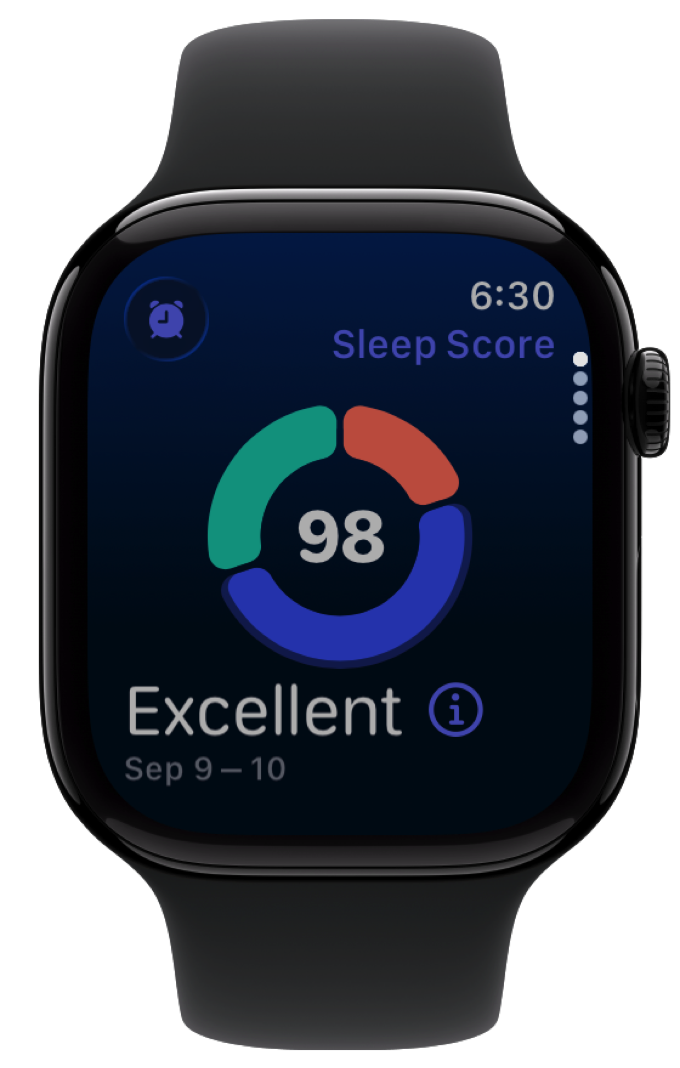
Powered by a good night’s sleep (I scored 98, Excellent!), here are some of my overall thoughts about what we saw on Tuesday:
Resetting the iPhone bar
Nobody with a thirst for novelty is going to get too excited about the base-model iPhone, this year’s iPhone 17. Ever since the iPhone X arrived eight years ago, Apple has followed a pattern in which it offers a pricey, cutting-edge iPhone, as well as a more affordable model that’s built on less cutting-edge tech.
And yet this year’s iPhone 17 upgrades matter, because it’s reset the bar for what features a “regular” iPhone offers. (Let’s not talk about the iPhone 16e.) The base-model iPhone now offers a ProMotion display, taking that price point all the way up to a maximum 120Hz refresh rate, with support for refreshes down to 1Hz and an always-on display.
This is meaningful. Last year, Apple released an absolutely gorgeous ultramarine iPhone 16. I held it in my hand. I wanted it. What stopped me from buying it was that I couldn’t imagine no longer having an always-on display. Maybe other buyers faced a different show-stopper, like ProMotion or camera quality. But those barriers are what force iPhone buyers up the price scale and allow Apple to convert a $799 sale into a $999 or $1099 one.
This year, Apple is more or less abandoning ProMotion and always-on as iPhone Pro differentiators. That means habitual buyers of the lower-end phones will be getting a really substantial improvement when they next update their phones!
Apple has also chosen not to skimp on its new selfie camera, but is putting it in all these flagship models. Again, that’s not a choice it needed to make, but it decided that the new Center Stage camera was worth putting on all of these phones. Similarly, the base iPhone’s ultrawide camera joins its main camera at 48MP, a feature found on the pro phones too. So the big camera difference between the two models really is the lack of a third telephoto lens.
These decisions also help the iPhone Air, which is taking over the slot previously held by the iPhone Plus and iPhone Mini. When the Air was first rumored, it seemed obvious that it would lack access to a bunch of high-end features, but in the end, it’s picked up most iPhone Pro features. The Air understandably has a single camera and lesser battery life, but of course it has the new selfie camera, a ProMotion always-on display, and the like—because they’re de rigueur on iPhones now.
My gut feeling is that this move to consolidate previously pro phone features is a part of the churning of the waters that’s happening as we enter a potentially new era of iPhone designs. The iPhone Air is here, there are rumors of a folding model next year, and then it’s the 20th anniversary of the iPhone, and who knows what might be waiting for us then? The iPhone X ushered in our current era of iPhones; it feels like we’re on the precipice of whatever comes next, and getting the base-model iPhones up to speed is one of the first steps Apple needs to take before it springs forward with new designs and the next generation of cutting-edge features.
Price increases the Apple way
Apple doesn’t like to just come out and say, “Welp, prices are higher now.” The company places an inordinate amount of pride into releasing upgraded products at identical price points. But this year, it raised iPhone prices, sort of, kind of.
Start with the iPhone Air, which begins at $999, a slot that was previously occupied by the iPhone Pro and a full $100 more expensive than the iPhone Plus, which it’s replacing in the product line. Apple has converted one of its two base-model phones into a new boutique mid-range model with a fancy design; we’ll see how that works out for them. My gut feeling is that it’ll do better than the iPhone mini or iPhone Plus did, but I don’t know if that’ll be enough to satisfy Apple.
Then there’s the iPhone 17 Pro, which now starts at $1099, up from the $999 starting price introduced with the iPhone X. Apple has gone to great lengths to point out that the $1099 price is the same as the similarly-configured iPhone 16 Pro model last year, because the iPhone 17 Pro has 256GB of base storage, and the iPhone 16 Pro started at 128GB. Yes, of course, this is true, and it allows Apple to claim that it’s not really raising prices, but is just continuing to fill the old slots.
It doesn’t change the fact that the iPhone Pro can’t be bought for less than $1099, though. Some percentage of iPhone 16 Pro buyers probably opted for 128GB of storage, and that’s no longer an option. So it’s literally an increase in the price of admission for the iPhone Pro. But done in a careful, almost generous way? As generous as a $100 price hike can be, anyway.
Apple Watch via satellite
The addition of satellite connectivity to the Apple Watch Ultra 3 is logical. It’s a rugged device sold as being useful on far-off adventures. And yes, you probably will have your iPhone with you too, but who’s to say it’s on your person, and has full battery, when you get into a jam? More safety nets, I say.
While SOS is covered in all eventualities (and Apple has kicked the can again regarding satellite access on older iPhones), the Apple Watch Ultra 3 requires a cellular plan to make texts or send your location via Find My.
It seems weird, but think of it this way: Cellular SOS features are mandated by law. If you’re on Verizon and find yourself in an emergency with no Verizon service, your iPhone or Apple Watch will make an emergency call using another carrier’s cellular network. Nobody is allowed to die because they happened to be using T-Mobile in an area only covered by AT&T.
This means that Emergency SOS Via Satellite is a feature that only works when your device has no cellular connectivity from any carrier.
But texts (and location) are not like that. You can just send them whenever. And Apple has decided that those features are only intended as a fallback to cellular connectivity. In other words, you’re not allowed to not buy a cellular plan for your Ultra 3 and then use it as a free text communicator in the woods. Apple and Globalstar, its satellite partner, are probably quite concerned about not blowing out the data bandwidth on those satellites.
Apple’s camera shell game
It’s apparent from all the product shots: the iPhone 17 Pro has three cameras, the iPhone 17 two, and the iPhone Air one. But if you listen to Apple, you’ll come away thinking that the iPhone 17 Pro has eight lenses, and the iPhone Air has four! Who are you going to believe, Apple or your eyes?
I get it. It’s marketing. But this continues a trend of Apple slicing its (very good) camera tech in a bunch of different ways in order to make things seem a bit more than they actually are.
Here’s what’s happening: Apple’s put 48 megapixel sensors in every single one of the cameras on its flagship iPhones. This started with the iPhone 14 Pro, and Apple has adjusted it quite a lot over the last few years. Those 48 megapixels can be processed in all sorts of ways. Apple can capture all 48 megapixels, or capture multiple binned 12-megapixel frames that gather more light and fuse them with a larger capture to create an optimal 24 megapixel image, or it can just use the pixels at the very center of the sensor to create a technically-optical “zoom” at a lower-resolution.
These different techniques allow Apple to balance image quality, file size, and the desire of the user to zoom in on scenes. They also allow Apple to market the 4x zoom on the iPhone Pro’s telephoto sensor as going to 8x, since if you go to 4x and then crop the center of the sensor data, you’ve effectively got an 8x optical zoom. Boom, two cameras! And now all three cameras can do it, so three becomes six! Throw in two macro modes and you’ve found how three iPhone 17 Pro cameras become eight, and how one iPhone Air camera becomes “four lenses in your pocket.”
The important thing to know about all of this is not that Apple’s fibbing, but that when Apple states that there are more cameras than appear to be there, it’s implying a level of equivalence of those cameras that doesn’t exist. They have different characteristics—of course they do—because they’re all different aspects of the same sensor.
Fortunately, Apple has designed the Camera app to make you not really worry about all this. You can point and zoom and shoot. But just be aware that one camera really is one camera, not four.
Apple Watch advantages and updates
It’s logical that Apple wouldn’t announce new features that are designed for unreleased hardware at WWDC. That’s top secret stuff, rolled into the new operating systems only when the new hardware is announced. What’s less logical is when Apple keeps features secret all summer, even though they run on plenty of existing hardware.
I’m sure the announcement of the Apple Watch’s new hypertension alert feature helped bulk up the Apple Watch segment and reinforce its image as an important health device. But that feature also works on Series 9 and 10 and Ultra 2. The new sleep score feature also provided needed fiber to the Apple Watch segment, but it’ll work as far back as Series 6.
I get why Apple does it, but just so we’re clear, you don’t need to buy a new watch to get a sleep score. I got one this morning, courtesy of the watchOS 26 release candidate, which I installed on my Series 10 last night. It’s another feature built on the premise that you sleep with your Apple Watch, so I guess it makes sense that Apple Watch battery life keeps getting longer.
When Apple announced that new hypertension-alert feature, I was struck by what it says about the scale of Apple’s reach and the power of its health efforts. This is a major new health feature that—just like the last one (Sleep Apnea detection)—does not come out of the addition of a new sensor. Instead, Apple is using its health studies, powered by an army of Apple Watch-wearing users, to generate massive amounts of data and use it to find patterns that can indicate potential health issues.
Apple may not be the only actor who can play in this space, but it has enormous advantages stemming from the sheer number of Apple Watches out in the world and its control of hardware and software. And in turn, that scale helps generate a feature that will warn a million people of potential hypertension in the first year—another big number. Scale begets scale.
Prepare for a change in selfie behavior
Selfies matter, and they’re not just for kids. Most of the photos I have taken with my family over the last few years have been from the front-facing camera, because we rarely ask someone else to take our photo! But so many of our selfie gestures are based on tech limitations, and someone at Apple has decided that enough is enough, so Apple redesigned its selfie camera.
The new Center Stage camera is square, wide-angle, and high resolution (18MP), which means you won’t have to change what direction you hold the phone to change orientation. It’ll auto-stabilize, which is great for FaceTime (and also for the new feature that lets you record forward and back cameras simultaneously—because it’ll keep you in frame without you worrying about it). And of course, the Center Stage name means it’s using face detection to automatically zoom in and out depending on who is in the frame.
We’ll see how it all works in practice, but it’s entirely possible that in five years, everyone takes selfies entirely differently, because Apple decided to re-engineer that camera. It makes sense, I think: First, you add a front-facing camera, one of low quality but good enough for video chat. Then everyone embraces the existence of that camera to start taking pictures of themselves. Selfie culture grows, and the cameras get better, but maybe some of the underlying assumptions still stem from the early days? This is another turn of the crank, an attempt to legitimately address a load of selfie issues in one go, and I suspect it’s going to be a winner.
Apple silicon’s endgame
Why don’t they make the entire iPhone out of Apple silicon? Apple is getting there. The iPhone 16e introduced the C1, Apple’s first foray into manufacturing a cellular radio to replace the ones it’s been using from Qualcomm. The iPhone Air uses a somewhat upgraded C1X chip to do the same thing. It’s part of a gradual roll-out that will presumably culminate next year in a next-generation C2 chip powering all of Apple’s flagship phones, thus ending Apple’s relationship with Qualcomm as a hardware supplier. (I’d expect iPads to start using the C1 series this year, and it wouldn’t be a shock if Mac laptops joined the cellular party in the next year or two.)
Also in all new iPhone models is the new N1 chip, Apple’s branding for another chipset where it’s replacing a partner, in this case Broadcom. That chip is packed with Apple’s own radios for Wi-Fi, Bluetooth, and Thread.
Toss in the A19 and you can see Apple’s future vision pretty clearly: it’s going to build everything it can itself, because when it can connect its custom software with custom hardware, it’s going to generate better products. Power efficiency is a big part of that, obviously. But it’s also about priorities. Broadcom and Qualcomm make parts for a variety of customers—Apple makes them only for itself. If there’s a feature Apple wants, it gets it. If there’s a feature Apple doesn’t want, it never gets built. And Apple knows its multi-year product plans in clear detail, something it’s not going to share with Qualcomm or Broadcom.
It’s the same advantage Apple got when it went from using Intel processors on the Mac to building its own. Now Apple has complete control of where it wants to go in terms of processor and wireless—and can build those products to work together, and work with its operating systems. This is one of those places where Apple just does things differently, and it keeps the company ahead of the crowd.
A sci-fi world comes closer
Everyone in the tech industry can see it. It’s right out there, not too far away: Live translation. Apple joins the party this fall with its implementation, which uses AirPods to listen and relay that audio to an iPhone, which uses AI to translate spoken words from one language to another and then plays the translation back in the ears of the AirPods user.
Apple’s video demo is great, if pretty awkward when the iPhone user has to hold up their phone so that their interlocutor can read a translation on the screen. Apple’s second example—two people with their own AirPods and iPhones—is more like the dream. Imagine, for a moment, a world where anyone could speak with anyone else and have their statements automatically translated. It’s magical.
I’m pretty skeptical of how well Apple’s translation feature will work in practice today, but you have to start somewhere. Given how hard Apple, Google, and others are pressing on this feature, it really does seem inevitable. In a few years, the latency will come down, and the AI voice technology will probably be able to entirely erase the original person’s voice from your hearing and replace it with a translation spoken in a dynamic copy of that same voice.
Basically, I am really not sure how practical this stuff is going to be right now, but I can see the outline of where this is going, and it’s really exciting. I’m sure Apple sees that too. But I’m not sure I’m ready to use this translation feature out in the wild.
An iconic plateau to the future
In introducing the iPhone Air, John Ternus referred to the stretched camera bump on the back of the new iPhones as an “iconic plateau.” Though this moniker is apparently informal—no capital letters—it reminded me of Apple’s tendency to name everything it does, like the Dynamic Island. The Dynamic Island was a creative solution to a physical hardware issue—cutouts in the screen for cameras—that turned unsightly blank spaces into part of a real-time status feature.
The iconic plateau strikes me as a bit similar. The camera bump existed because of the sheer physics of collecting light for camera sensors. But at some point, Apple seems to have looked at it and thought, what if we turn that bump into something more? This year’s iPhone Air and iPhone 17 Pro stuff more and more additional technology into that space. Most of the iPhone Air’s guts are in there, leaving very little beyond the screen and battery in the rest of the phone.
It actually makes sense, doesn’t it? We want our screens to be big, and batteries are vital. Screens are so large that tucking a little bit of battery behind them makes sense. What’s left? Oh, right, everything else. So all that stuff goes in the plateau, leaving the rest of the phone ultra-slim.
The iPhone Air may be an outlier right now, but I really wonder if it also augurs a future direction for iPhone design in general. Maybe not with designs quite as extreme as the Air, but just as the MacBook Air pointed in the general direction Apple’s laptops went over the next decade, I wonder if this approach—keep the bulk of the device thin and light while stuffing as much tech as possible in the thick part at the top—is informing Apple’s iPhone designs for the rest of this decade.
A victory for the color czar
Finally: Welcome, Apple. Seriously. You finally made a pro-level iPhone with a real color. I haven’t seen the Cosmic Orange iPhone 17 Pro in person yet, but I’m optimistic that it’s going to mark the first time in a long time that Apple has opted to take one of its top-of-the-line phones and give it a color that isn’t mostly silver or mostly black.
I think I understand why it’s like this. The phone’s primarily made out of an aluminum unibody, and aluminum is easily anodized into all sorts of fun colors. But Apple still had to take the step of actually using a fun color and offering that to iPhone customers.
An orange iPhone Pro. I never thought I’d see the day. Congratulations to whoever is in charge of colors at Apple. You did it. (Now, about these watered-down colors on the iPhone Air…)
Thoughts on Apple’s iPhone colors this year, whether we’d try the new TechWoven cases, if we’re doing any AI-related work on our phones, and whether there’s still room for innovation in the iPhone compared to Apple Watch or AirPods.
I really enjoyed today’s Stratechery piece by Ben Thompson, which tries to understand how Apple can have an impressive roll-out of some really good new products, and yet it all seems so much quieter than it used to:
I have, for the last several years, noted how, from a Stratechery perspective, iPhone launches just aren’t nearly as big of a deal as they were when I first started. Back then I would spend weeks before the event predicting what Apple would announce, and would spend weeks afterwards breaking down the implications; now I usually dash off an Update that, in recent years, has been dominated by discussions about price and elasticity and Apple’s transition to being a services company.
What was shocking to me, however, was actually watching the event in real time: my group chats and X feed acknowledged that the event was happening, but I had the distinct impression that almost no one was paying much attention, which was not at all the case a decade ago. And, particularly when it comes to tech discussion, you can understand why: by far the biggest thing in tech — and on Stratechery — is AI, and Apple simply isn’t a meaningful player.
The circus was Smartphones for a while, but right now the circus is AI.
I found myself thinking about satellite connectivity during today’s Apple event, during which the company announced that the Apple Watch Ultra 3 would include the feature. Back when the feature debuted on the iPhone 14 line, Apple said it would remain free for two years. When that period was up, Apple extended free coverage for another year. Which brings us to this year! Will people have to finally start paying?
iPhone 14 and iPhone 15 users are getting another year of free access to satellite connectivity features, according to a footnote on Apple’s newsroom posts for the iPhone 17 and iPhone 17 Pro. “The free trial will be extended for iPhone 14 and iPhone 15 users who have activated their device in a country that supports Apple’s satellite features prior to 12 a.m. PT on September 9, 2025,” Apple says.
Yep, we’re going to keep kicking that can right on down the road—probably forever, at least as far as the Emergency SOS features go—as I said previously, somebody dying because they didn’t pay the fee for satellites would put a real damper on that keynote montage.
However, it is worth noting that while the Apple Watch Ultra 3’s satellite features are likewise free for two years, using the Find My or texting features requires a carrier plan. Moreover, as Apple’s footnote reads: “To send and receive SMS/MMS from cellular models of Apple Watch over satellite, your paired iPhone must be powered on and connected to Wi-Fi or an active cellular network, but your iPhone doesn’t need to be nearby.” So you can’t just rely on your Apple Watch Ultra 3 for all your satellite texting needs, I guess.
It’ll be interesting to see if Apple ever does start directly charging for non-emergency satellite features, but I think it’s going to be a while yet before we find out.
From the iPhone Air to the iPhone 17 models, from AirPods Pro 3 to the new Apple Watches, we break down all the announcements from the September Apple Media Event!
Apple crams a lot into its keynotes, but almost as notable is what it chooses not to talk about. Having had some time after today’s “awe-dropping” event announcing the iPhone 17 line, Apple Watch Series 11, and AirPods Pro 3, here are a few things I found out.
The new MagSafe battery is an iPhone Air exclusive
There were no doubt some shouts of joy when Apple mentioned it had a new version of its MagSafe Battery, but if you want one of those to boost your phone’s longevity, be aware: it’s an iPhone Air exclusive. The key’s in the name “iPhone Air MagSafe Battery”—Apple says it “was created exclusively for iPhone Air” and only the iPhone Air is listed in the Compatibility section. Sorry iPhone 17/17 Pro users, you’re out of luck. (Alas, the same is true of the new iPhone bumper case too.)
FineWoven…lives!
Apple introduced new “TechWoven” cases at this year’s event, but Apple’s previous attempt at a premium material, FineWoven, is not only still around, but is included in new products. There’s a brand new set of FineWoven MagSafe wallets in various colors to compliment the latest iPhone models, including a “Fox Orange.”
The iPhone Air is likely using binned chips
Impressive as it is that the new iPhone Air uses the same A19 Pro as the iPhone 17 Pro models, they aren’t quite as good: looking at the specs comparison page will show you that the Air boasts just 5 GPU cores to the 6 cores found on the Pro and Pro Max. Guess you won’t be doing important AI pipeline tasks on your new incredibly thin iPhone, oh well.
Live Translation isn’t just for AirPods Pro 3
Apple spent some time talking about the new Live Translation features in AirPods Pro 3 (a feature that’s also available in other forms on the company’s various platforms), but don’t worry, you won’t be left out in the cold if you don’t buy the latest and greatest earbuds. The company’s fine print says “Live Translation with AirPods works on AirPods 4 with Active Noise Cancellation and AirPods Pro 2 and later with the latest firmware when paired with an Apple Intelligence-enabled iPhone running iOS 26 and later.” You are free to travel about the world.
Apple Watch health feature availabilities
Likewise, Apple Watch’s new health features—hypertension detection and the sleep score—are available on more than just the company’s latest devices. Hypertension detection works with Apple Watches with S9 and later processors (sorry, owners of the original Apple Watch Ultra), probably using the same sort of machine learning systems that enable the gesture detections. Sleep score appears more broadly available, dating back to the Apple Watch 6 and second-generation Apple Watch SE.
Operating system updates coming soon
While there was no specific release date for Apple’s platform updates announced during the keynote, the company says iOS 26, iPadOS 26, watchOS 26, macOS 26, and visionOS 26 (and presumably tvOS 26 and the HomePod update) will arrive on Monday, September 15.
Updated at 5:20pm Eastern to clarify that all platform updates are coming on Monday.
[Dan Moren is the East Coast Bureau Chief of Six Colors, as well as an author, podcaster, and two-time Jeopardy! champion. You can find him on Mastodon at @dmoren@zeppelin.flights or reach him by email at dan@sixcolors.com. His next novel, the sci-fi adventure Eternity's Tomb, will be released in November 2026.]
Concerns have been raised about “excessive noise” during a recent commercial film shoot.
Merchant City and Trongate Community Council (MCTCC) say they received a complaint from a local resident about the noise and “other disruption” during filming which took place on Cochrane Street from Saturday, August 23 to Wednesday, August 27.
It’s understood the filming was for an Apple advert. A video taken of the shoot and shared by the Glasgow Times showed one actor ‘floating’ down from the roof of a building.
Hmm. An Apple advertisement featuring an actor floating down from the roof while using their iPhone? Seems like that might be promoting a very light iPhone of some sort.
I suppose we’ll find out sooner or later. (Update: Yep, it’s the iPhone Air all right.)
Before the iPhone, Apple took a shot at making the iPod a device that could do more than just play music. Amongst it: playing games.1 If you find yourself feeling nostalgic for that era, you can now revisit those classic games designed for the iPod—it just takes jumping through a few hoops, as Ars Technica’s Kyle Orland reports:
Now that the consolidated clickwheel game collection is complete, though, owners of any iPod 5G+ or iPod Nano 3G+ should be able to sync the complete library to their personal device completely offline, without worrying about any server checks from Apple. They can do that by setting up a Virtual Machine using these GitHub instructions or by downloading this torrented Internet Archive collection and creating their own Virtual Machine from the files contained therein.
The project has recently added the last missing game, Real Soccer 2009, to the archive, so it’s now complete. Apple has in the past revived one of those old games, but I wouldn’t be holding my breath for the rest of them to resurface in the App Store anytime soon.