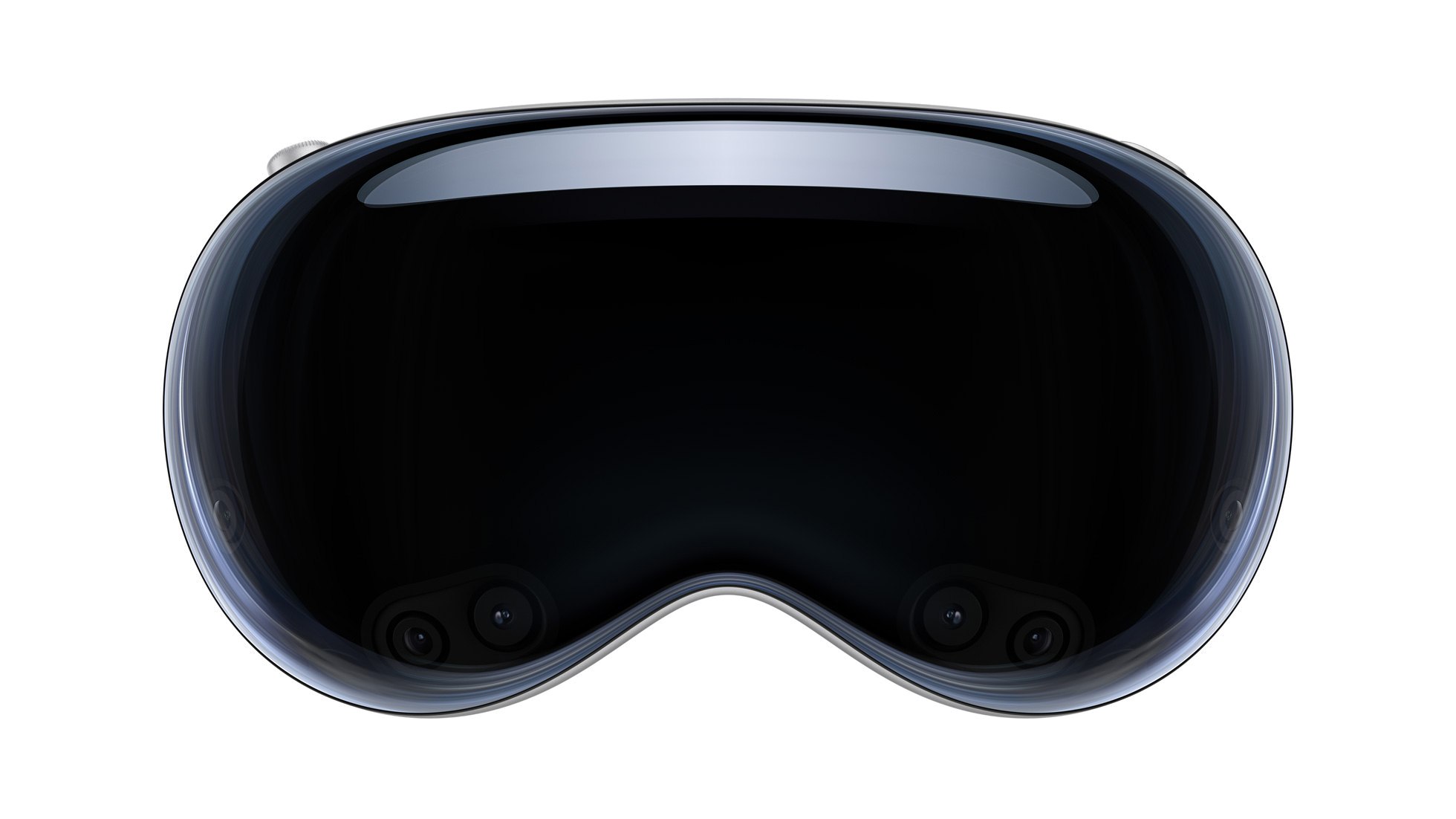
Episode 500 prompts us to revisit predictions from episode 400 and make some new ones for episode 600. Myke also reveals his votes in the annual Six Colors Report Card and Jason adds some ratings of his own.
It’s time for our annual look back on Apple’s performance during the past year, as seen through the eyes of writers, editors, developers, podcasters, and other people who spend an awful lot of time thinking about Apple.
This is the ninth year that I’ve presented this survey to a hand-selected group. They were prompted with 12 different Apple-related subjects, and asked to rate them on a scale from 1 to 5 and optionally provide text commentary per category. I received 58 replies, with the average results as shown below:
Since I used largely the same survey as in previous years, I was able to track the change in my panel’s consensus opinion compared to previous years. The net changes between 2022 and 2023 surveys is displayed below:
Read on for category-by-category grades, trends, and commentary from the panelists.
The Vision Pro was fun until my brain started leaking out of my ears! Heck, even Mark Zuckerberg doesn’t like it. Guess we’ll just have to hope Apple has some new products planned.
Side effects include
As the cutoff date for Vision Pro returns approaches, some are sending back the device, citing nausea and other detrimental physical effects such as reddened eyes as their reasons for wanting their $3,500 back.
…For Carter Gibson, a senior manager working on community management and moderation at Google, it’s the finer details. Things like futzing around with windows and file management are productivity deal-breakers.
That may seem an odd person to pick, but that’s just one of the “Apple fans” The Verge quotes in the piece. Others include The Verge’s own product manager, the CEO of an AI company, a random Reddit user (the only one who comes across as a real “Apple fan”), and a “tech influencer” whose pinned post shows him holding a foldable and says “Hard to deny Samsung is winning right now.”
There might also be a number of people—sorry, “Apple fans”—who bought the Vision Pro to be stunt users in Cybertrucks, restaurants, and rodeos, then found they had no more use for the device once they got the clicks they wanted.
Still, the Vision Pro is expensive and it is a more physical experience than almost any other product. You might put up with an OK fit with your $250 AirPods Pro, but you’re way less likely to do that with something that costs $3,500.
And, to be honest, the concerns about nausea and other physical side effects are the second biggest reason this writer doesn’t have a Vision Pro, the first being not having been gifted one by a wealthy passerby in a fancy limousine.
“Say, my good man. I happen to be driving around handing out the latest doodaddle from the fruit company! Enjoy!”
“Thank you, Mr. Spendington!”
Too many NopingOutToMars-ingtons and not enough Spendingtons in this world.
The last word in Vision Pro reactions
Speaking of Apple fans, even noted Apple fan Mark Zuckerberg doesn’t seem to think much of the Vision Pro. (Hey, if Samsung foldable dude is an Apple fan, why not Mark Zuckerberg, too?)
Zuckerberg made his comments in an Instagram video this week. Later (I guess because he’s so Meta), he followed up to explain why he posted the video. Turns out it’s because of “Apple fanboys”.
“I just saw the media coverage around this was just sort of breathlessly assuming that, I think because it’s Apple and because it was such an expensive product, like it must be the better one in quality, even though a lot of people are saying, hey, no, you should go buy Quest 3…”
Many people are saying.
”…we’re a company that moves pretty quickly, so I actually think we’ll probably move faster.”
Unless it has anything to do with content moderation. In which case it’s Apple’s fault.
Coming attractions
So, Apple released some new headset thing that’s supposed to be a big deal. But that was weeks ago. What has the company done for me lately?
Word on Frequently Unreliable St. is that Apple will hold a March event which will, after the company failed to introduce any last year, finally include new iPads (FINALLY) and even a new MacBook Air (FINALLY!).
That third finally was also for the iPads.
A sketchy rumor suggests Apple has stopped work on a foldable iPhone because the screen kept breaking. Advantage: Samsung yet again. Their users love screens that break.
Apple rumors, it turns out, are a perpetually renewable resource. If only we could find a way to burn them cleanly.
[John Moltz is a Six Colors contributor. You can find him on Mastodon at Mastodon.social/@moltz and he sells items with references you might get on Cotton Bureau.]
Jason’s been in Duck Mode this week prepping the annual Report Card story; judging Apple’s intentions in the removal of Progressive Web Apps in the EU.
Designed from the ground up to protect your privacy, Magic Lasso blocks all intrusive ads, trackers and annoyances in Safari – stopping you from being followed by ads around the web. Along with respecting your privacy, the app also includes best-in-class YouTube ad blocking to block all YouTube ads.
With over 5,000 five star reviews; it’s simply the best ad blocker for your iPhone, iPad and Mac.
No matter what you think of its future prospects, we can all agree that the Vision Pro is weird, right? One of the world’s most powerful companies has spent a decade preparing to ship a new product and platform that’s embodied in a $3500 VR headset that lets you use apps in 3-D space.
After a decade of steady and boring iteration, the Vision Pro is… not that. And I love it.
Apple is so disciplined and conservative with its product choices and has largely benefited from that tendency. Pretty much every hardware product Apple ships sells in such great numbers that it makes it awfully hard to experiment in public. (The Sony-made displays in the Vision Pro are available in such limited supply that Apple won’t even be able to sell a million of them in the first year, which is probably just as well since the product is very much a version 1.0.)
But while I admire the great care Apple takes before it brings a product to market, I do sometimes think that the company is missing out on some potentially great products because they’re not willing to get weird—and risk failure. Consider the original MacBook Air, which was deeply weird—but led to a second-generation model that became the template for Apple’s laptop design for the next decade!
The technology already exists today for Apple to create some wild stuff, the likes of which we’ve never seen from them. The Vision Pro has broken the seal. Let’s get weird, Apple.
When it comes to accessibility, Apple is reliable. A person with disabilities who wants to use the company’s tech can count on assistive features with familiar names and functions being there across an array of platforms.
Though Macs got the VoiceOver screen reader first, the modern era of Apple access really began in 2009 when basic accessibility features came to the iPhone. Through the introductions of the iPad and Apple Watch and AppleTV models running software based on iOS, the accessibility suite has advanced, always building on the baseline, with just a few hiccups along the way. And once a feature debuts on one platform, it generally finds its way to all of them, with tweaks included to account for differences in the way you use a watch, a tablet or a computer.
So it isn’t surprising that Vision Pro accessibility builds on what’s gone before. What is surprising is the mix of real innovation here, along with some decidedly version 1.0 explorations of what’s possible.
Accessible Impressions: The Short Version
I don’t own a Vision Pro — my experience so far has only come at an Apple Store demo, so I have an incomplete picture. At my demo, I focused on whether I, with my particular flavor of low vision, could use this thing, and what my experience could say about how Apple has approached Vision Pro accessibility generally. This is my first chance to look into the future. I’ll need more time with the device before I can assess the usability of a challenging technology for everyone who wants that chance.
Going in, I was pretty sure that eye tracking would not be the way I interacted with the headset. I’m extremely near-sighted and sensitive to light. So I was prepared and warned Kevin, the retail employee setting up my demo, that I would most likely need to use VoiceOver or one of several pointer control methods that don’t require a well-aimed eye gaze. I didn’t opt to use VoiceOver beyond an initial run-through because I wanted to use my vision as much as I could, and there was more to learn about working around eye gaze than by using a screen reader. As an Apple product with its roots in iOS, the VoiceOver experience promised to be routine.
The accessibility experience began with device setup. Scanning my face to fit the light seal went smoothly, with Kevin guiding me as I turned my face to show the iPhone all angles. Without that help, I would have required VoiceOver, as I do when I set up Face ID on my own devices.
Next, I showed my high-powered reading glasses to Kevin. I don’t wear them when I use a computer or my phone, but they’re helpful when reading printed documents. They have thick prescription lenses, and I had guessed that there would be no Zeiss insert available at the store that matched them. Based on filling out the Zeiss prescription form for Vision Pro, it is possible to get an insert for my prescription. I was shocked by that, since they’re so heavy. Based on what I learned later in the demo, I feel relatively certain I could have benefited from an insert matching my lenses – at least for using the Vision Pro as a computer, if not for consuming entertainment.
Finally, because I wouldn’t be using eye tracking, I didn’t calibrate with the series of dots most users do, but simply matched my palms to onscreen prints to support the hand-based pointer options. The process was simple and quick, which was helpful since Kevin later had to reboot my device and redo the setup process when some of my gestures weren’t working.
Inside the Goggles
With accessibility at the forefront of what I wanted to accomplish, Kevin, whose iPad showed him what I was seeing and allowed him to guide the experience if need be, directed me to accessibility settings, where we enabled VoiceOver just long enough to show me how I could use it to move through the many other options. You can also use the screen reader to set up a Vision Pro independently, with a triple-click of the digital crown during startup. This option mirrors what’s available on an iOS device or Mac. You can use Siri to turn VoiceOver and most other accessibility features on and off quickly once you’ve got the device up and running.
Kevin showed me Zoom, which applies magnification to a frame onscreen by default. I found out later that you can zoom the full screen and that a turn of the digital crown will increase the zoom level in either mode. Sadly, the default-level zooming I did during my demo, without knowing how to increase magnification, didn’t make the text large enough for me to read, though I could see it and could select highlighted items with some guidance. There are also text size adjustments, which I wasn’t able to try at the store.
Next, Kevin showed me how to use pointer control to pick an alternative to eye tracking. Pointer control is the first instance in which the Vision Pro’s accessibility innovation really comes through. At different times during the demo, I used my wrist, index finger, or head to move a pointer that I could see onscreen. Like an iPad pointer controlled by a trackpad or mouse, the Vision Pro pointer is round and, to my eyes, visible but not very big. (It is apparently possible to adjust the size and color of the pointer.)
On a Mac, you can make the pointer larger and locate it with a gesture if you lose it onscreen. Those would be great features for a future Vision Pro update.
Each pointer control method was effective and a little mind-blowing at first. Pointing with my head was surprisingly effective, and during the half-hour of the demo at least, I never experienced motion sickness while I wore the headset.
A number of reviewers, including Jason, have written that a keyboard and trackpad are important accessories for Vision Pro productivity. I agree, and would especially urge those with disabilities that allow them to use input devices to get them. Though I didn’t have the chance to type on the virtual keyboard, I’ve seen it, and I’m certain that hardware is a far more accessible option. A trackpad and appropriately modified onscreen pointer would certainly make working on the device possible for me.
Sizzle and Substance
With a few accessibility settings enabled, I was ready to begin an abbreviated version of the canned Apple demo. I had difficulty making scrolling gestures work reliably, which meant less time moving through the selection of photos and Safari pages I was shown. I think a large part of the problem had to do with learning the rhythm of using my fingers or wrist to locate and select items and then the standard Vision Pro pinch and scroll gestures to act on them. Using VoiceOver instead of pointer control or having more time to practice all of these new gestures would almost certainly make me a more competent navigator, but in the demo environment, I was less than successful.
Knowing that the immersive video section was designed to create a mind-blowing finale to the demo, I let Kevin know that I was ready to stop struggling with Web pages and photo scrolling. We went back to the main app window, where I was told to open AppleTV+. Floating on top of a beautiful lake environment, the app window’s contrast wasn’t as pronounced as I needed it to be, and I couldn’t see app icons well enough to identify them. My guide patiently directed me to the app icon I wanted. Same for opening the demo video inside the Apple TV app. There was too much going on here, on a screen that was too far from my eyeballs, for me to select the item I needed to view. Kevin finally got me to the right place on screen, and I sat back for a much more relaxing few minutes in the company of Alicia Keys, birthday party kids, and a rhino.
The immersive video was great! I was able to see the 3D effects, experience the impossible viewing angles on a sports field, and feel as if I were truly inside the experience. Immersive video, and the Vision Pro as consumption device, I get!
Looking into Vision Pro was, I decided later, like looking through a window or watching TV from across the room.
To view a phone or a Mac, my eyes need to be a mere inch from the screen. So, interacting with settings and then the app screen was a hugely different experience than writing this article on my Mac. A high-power lens insert or full-screen zoom might make it possible to read, write, and navigate Vision Pro, but I’m not really sure about that. During my demo, I felt as if I could never get close enough to the screen. It’s one of the biggest variables in low vision. Where do you need to be, relative to the content you want to read or see, to get the best view? And whatever you do to find that perfect balance, how does the way you interact with a computer screen differ from the way you view a TV or movie screen? I don’t really want to wear reading glasses when I’m watching Avatar.
A Bigger Picture
As I wrote here back in June, a device that relies on eye tracking and fairly simple hand gestures as default modes of input offers great accessibility benefits to some people who can’t use keyboards, mice, and trackpads in the usual way. Evaluating how well the Vision Pro works as a computer alternative for someone with physical and motor needs is beyond the scope of my 30-minute, vision-focused demo, as well as my own life experience.
And it’s worth pointing out that features like Voice Control and AssistiveTouch, which are designed to make the iOS interface more usable by folks with physical and motor challenges, are all also there on Vision Pro. In terms of a sheer number of features, it’s an impressive collection of tools, made more by the fact that they’ve each been a part of Apple’s other platforms for multiple releases, giving users with a variety of needs the time to find their strengths and weaknesses.
Aspirational Accessibility
I know a number of blind or visually impaired folks who are excited about the Vision Pro. They’re Apple enthusiasts and embracers of new tech like most of us hanging out at Six Colors. But when I’ve asked blind colleagues what they want from Vision Pro, the conversation almost always moves to the future—not the opportunity to do computing tasks on a head-mounted device or even to watch a movie in the headset. Many blind people want Vision Pro to be an eyesight alternative or assistant, a way to see the world, identifying both the wondrous and the mundane.
Today, AI-powered iOS apps can describe a person, find a doorway, or read just the important bits of a food label aloud. A combination of a device camera, AI, and human interaction can assist a blind person in navigating to an appointment on foot or in a vehicle. Eventually, my blind friends assume, Vision Pro will be able to do all of these things, essentially allowing the wearer to “look” at the world around them and extract knowledge from it in meaningful ways. Eventually, these users assume Vision Pro’s cameras will be able to describe what they see. Developers will be able to harness camera data to interpret images beyond what’s literally visible. And the headset, or a smaller, lighter reincarnation of it, will be suitable for walking around outdoors.
For the blind tech enthusiasts I know, that’s the ultimate promise of Vision Pro. For now, it’s an expensive way to do what many are already doing with devices they carry. But one that offers both a solid start on the road to full accessibility and an enticing treasure map to the future.
Disney, Fox, and WBD come together to create a sports streaming joint venture, but what does it all mean? [Downstream+ subscribers also get to hear us discuss Disney’s Epic investment, Sports Corner updates, and the most streamed originals of last year.]
This week Apple sighs heavily every time you forget your password, YouTube puts the Vision Pro on its map, and Tim Cook gets all set for the snap.
This is why I use the same password for everything
Despite a fairly smooth launch for the Vision Pro, there were one or two signs that maybe not everything was completely ready on day one.
Shortly after the device’s introduction, reports indicated that customers who forgot their password were being required to go to an Apple Store in order to have it reset. It is unclear whether or not customers were led through the mall by a cleric ringing a bell and loudly declaring “SHAME! SHAME!” But, as a father who has many more times than once had to deal with resetting a device for a child who changed his password and promptly forgot it, I welcome this new stricter regime. It is high time we cracked down on these infractions and I hope this new practice spreads to other Apple devi-
After early drama about YouTube and Netflix not being available on the Vision Pro on day one, there was some awkward coughing and maybe at least one of them has changed their mind.
For its part, Plex has said that it’s not currently developing a dedicated app for the Vision Pro.
Great, now what am I going to use to immersively watch all these 720p rips I did of my DVD collection 15 years ago?
Plex probably doesn’t have the time to make a Vision Pro app because it’s too busy running away from its core business of being the go-to software for sharing ill-gotten media.
Look, if I wanted to rent movies, I wouldn’t have a Plex account. Duh. Do you even hear yourself?
The Tim Cook Cinematic Universe
This week Apple teased the upcoming Apple Music Super Bowl Halftime Show (AMSBHS) featuring Usher, first with a short clip and then a 7-minute long skit featuring Ludacris, Lil Jon, and Taraji P. Henson being commanded by Apple CEO Tim Cook to find Usher, who has gone missing, in time for the big show.
In the long-standing tradition of the ads surrounding this uniquely American event, the skit is not terribly funny but it does include Ludacris delivering the line “Tim, I’m sorry, bro.” Which is, of course, a famous callback to what Scott Forstall said to Cook during the Maps fiasco.
If you are anything like me (older and out of touch), after seeing this ad you will laugh heartily and say to yourself “I have no idea what that was all about or who half these people are!”
Still, we are seeing a pattern here. After last year’s skit that placed Tim in a meeting with Mother Nature, it seems clear that Apple has created what amounts to a Cook Cinematic Universe (CCU) revolving around the award-eligible CEO.
Sadly, despite the small number of productions in the CCU, there are already signs that its quality is degrading. Perhaps people are simply tired of super Tim stories or maybe the productions just aren’t as good anymore. For example, the plot device of a missing key element for an event was already used in the September 2018 iPhone XS keynote event, which featured a missing presentation clicker.
And don’t get me started on “Secret Timvasion”. What a stinker.
What’s next, viewers are left to wonder? Lazy stories invoking such overused sci-fi tropes as Tim travel? Or a multimverse?
Actually, you know what? I would watch those.
[John Moltz is a Six Colors contributor. You can find him on Mastodon at Mastodon.social/@moltz and he sells items with references you might get on Cotton Bureau.]
My thanks to Kolide for sponsoring Six Colors this week. Kolide helps its customers keep their devices in compliance, which keeps their company data safe.
Kolide has seen a rise in cyber liability insurance issues recently. Companies are investing more in security insurance and less in actual security. The result has been a tidal wave of data breaches that have driven up the cost of premiums to the point that they are rapidly becoming unaffordable.
Kolide has seen its cyber insurance premiums go up by 40% in just the last two years. It turns out that insurance companies themselves can help get us out of this crisis, by mandating some (pretty basic) security requirements for their customers–things like MFA, endpoint security, and retiring end-of-life software. Read Kolide’s full blog post to learn more about their findings.
Vision Pro reactions and potential
The Vision Pro as both a product and future potential; our reactions to the reactions to the device.
It’s been a very long time since Apple released a product as speculative and impractical as the Vision Pro, its $3499 first-generation “spatial computing” headset. Led by Apple, today’s technology industry sells billions and billions of dollars worth of technology to a grateful public that uses our smartphones, laptops, and other devices in nearly every aspect of our lives.
It wasn’t always this way. When I was a kid, personal computers were just beginning to arrive in homes and schools. As I anticipated the arrival of the Vision Pro, I kept remembering the earliest days of the PC, the days when Apple IIs, TRS-80s, and Commodore PETs ruled.
In those days, computer technology wasn’t practical. You’d spend the equivalent of $5000 in today’s money on a computer, bring it home, and be immediately confronted with the big question: “Well, now what?”
And yet people bought them, mostly because they got the sense that this was the first step into a new era. Being a Gen X’er means that you were probably told at some point in your young life that “computers are the future”—a meaningless statement that nonetheless turned out to be absolutely true. People didn’t know just what it all meant, but it was new and clearly where the world was headed, and for some adventurous souls (or those who broke down and listened to the begging from their kids), that was all that was required.
I first learned what buyer’s remorse felt like about 12 hours after coming home with a new computer. New computers were exciting, but then what? There was very little software available, and the suggestions your computer salesperson would give to adults were impractical things like keeping a recipe database or balancing your checkbook. As for me, I’ll just say there was a lot of 10 PRINT “JASON IS GREAT” 20 GOTO 10 in those days.
This moment very much reminds me of that moment. Like those early computers, the Vision Pro is an expensive piece of cutting-edge technology that strongly suggests a possible future. (Is it really the future? That, we don’t know.) There are very few use cases for which I can say that, yes, the Vision Pro is a smart investment at $3499. Getting a taste of the future isn’t cheap, and it’s not especially practical, but it’s such a rare opportunity that it can sometimes be worth it anyway.
Our favorite PC/Mac apps; the apps we use for photo-taking, editing, and sharing; our thoughts on Vision Pro Personas; and our interest (or lack thereof) in Bluesky amidst potential social media saturation.